
The Piprahwa: jewels or relics of the Buddha?
Jimena Rubio Juncal | 5 October 2026

In 1898, what is believed to be one of the ten original burials of the Buddha’s remains was discovered in Piprahwa, India. This was – and still is – considered one of the most important archaeological discoveries in India. The burial contained bones, ashes and over 1,500 finely made jewels ranging from pearls to gold objects to carved precious stones. The bones and ashes are considered relics as they belonged to a holy person. After being in such close proximity to those bodily remains, the jewels are also considered equally sacred relics in the eyes of many Buddhists, according to Indian art historian Naman Ahuja. This is the case despite the belief that the jewels were added to the burial posteriorly by King Asoka. They have been dated to the first to third century BCE while the Buddha is believed to have passed away in the fifth century BCE.
When they were discovered, most of the bones and ashes were gifted to the only remaining Buddhist monarch at the time: the King of Siam, modern day Thailand. This was done to improve relations between India and the then Kingdom of Siam. Most of the jewels were stored in the Museum of Kolkata, India. However, 349 jewels were taken to the United Kingdom by the British landowner responsible for the discovery: William Claxton Peppé. This was authorized by British-ruled India. Under the custody of the Peppé family, the jewels were passed on from generation to generation until in 2025 their current heirs put them up for auction in Hong Kong.
Upon hearing of the auction, the Indian government claimed the jewels. The Indian Ministry of Culture wrote to the auction house, Sotheby’s, and to Chris Peppé. The latter was the person who had been the most involved of the three Peppé relatives who were selling the jewels. In the letter, the Ministry of Culture referenced Indian and international law to defend India’s ownership of the relics. Indian law states that these jewels are antiquities from a monument of national importance and therefore belong to the Indian government. International conventions (UNESCO’s 1970 Convention, the UNIDROIT Convention from 1995, and the Hague Convention from 1954) state that cultural property should be returned if it has been exported illegally. But the jewels were taken abroad before the establishment of these laws, which questions the legality of their export and complicates the assignment of ownership to either the Peppés or the Indian government.
In response, Sotheby’s halted the auction and both Sotheby’s and Chris Peppé agreed to enter into negotiations with Indian representatives. In the end, the Peppé family sold the relics to the Indian corporation Godrej Industry Group, who got involved to contribute to the relics’ return to India. In January 2026, an exhibition, The Light and the Lotus: Relics of the Awakened One, opened its doors in Delhi to allow the public to see the relics.
This process makes evident the opposing perspectives of those selling the relics (the Peppé family and Sotheby’s), on the one hand, and the Indian government, on the other, regarding what the relics are and who they belong to. They each used different words during the process that framed their respective actions as reasonable: while one paints the auction as a fair way to pass the jewels on, the other believes repatriation to be the only acceptable way to do so. By analyzing the language used by the Peppé family as opposed to the Indian government and other Buddhist representatives that engaged in the debate it is possible to recognize a colonial pattern. This text focuses on the Peppé family rather than Sotheby’s as the Peppés have been more vocal about the Piprahwa relics. Moreover, it is useful to also consider Buddhist voices alongside the Indian government as their engagement in the debate around the auction clarifies and supports the arguments of the Indian government.

"Jewels" or "relics"?
After inheriting the relics in 2013, Chris Peppé and two of his cousins created a website called The Piprahwa Project. The site contains information on the discovery of the Piprahwa burial, a timeline for the journey of the 349 jewels kept by the Peppé family, letters from W.C. Peppé documenting the discovery, and further research and information on their portion of the relics. After the return of the relics to India, these documentation efforts were acknowledged by the Indian Ministry of Culture in the catalogue of The Light and the Lotus exhibition:
“Through his carefully preserved family archives—photographs, excavation notes, correspondence, and records—he [Chris Peppé] enabled rigorous scholarly research, setting a model for responsibly sharing colonial-era heritage and restoring historical transparency.”
However, the language in their Piprahwa Project website reveals a different perception of the relics from that of many Buddhists and the Indian government. In the site, the 349 jewels are mostly referred to as “jewels” rather than “relics”. The term “relics” is reserved for the bones and ashes also found in the Piprahwa stupa. There are a few instances where the jewels are referred to as “gem relics”, but never solely as “relics”.
In contrast, Buddhist representatives that protested against the auction mostly refer to the 349 jewels as “relics”. Yon Seng Yeath, chancellor of the Preah Sihanouk Raja Buddhist University, claimed that “selling Buddha’s relics isn’t just a legal or commercial issue: it’s a moral failure.” Similarly, Thai Buddhist monk Phra Paisal Visalo stated that “auctioning the Buddha’s relics is highly inappropriate.” It is true that Buddhist representatives also refer to the 349 jewels as “jewels” or “gems”, but even in those cases they emphasized the jewels’ sacredness. The British Maha Bodhi Society, in a letter addressed to Sotheby’s regarding the auction, referred to the jewels as “sacred items” as well as “gems”.
Indian art historian Naman Ahuja explained in an interview about the Piprahwa relics how in the eyes of many Buddhists any items buried with a holy body are considered bodily relics as much as the body itself is. There is no distinction between the bones or ashes and the jewels buried with them. The Indian Ministry of Culture did not go as far as recognizing the jewels as bodily relics, but they emphasized the equal sacredness of the jewels and the bodily remains. They state that the jewels are “inseparable” from the bones and ashes, and “cannot be commodified”.
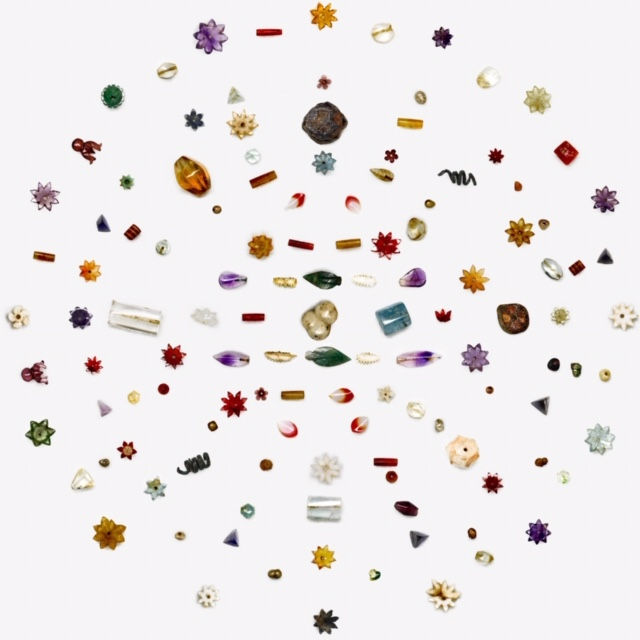
A more blatant clash in language is the Peppés’ use of the term “duplicates” to refer to the 349 jewels they took custody of. It is not clear what is meant by “duplicates” in the Piprahwa Project website. The Indian Ministry of Culture, in their already mentioned letter, critiqued this terminology. They stated that, whether the term means that the 349 jewels were exact copies of others or that they were deposited more recently by a later generation, it disregards that all the jewels are equally sacred.
These different perceptions of the jewels point to two different ways of passing them on:
“Jewels” are not inherently sacred; they are often appreciated for their beauty over their meaning; and they are commodifiable goods. A reasonable way to pass on jewels would be to sell them. Chris Peppé deemed an auction to be the “fairest and most transparent way to transfer these relics to Buddhists.” Despite referring to them as relics in this quote, his understanding of them seems to align more with (commodifiable) jewels.
“Relics” are inherently sacred; they are venerated for their holiness; and they are non-commodifiable. A reasonable way to pass on relics would be to repatriate them to where they were venerated originally. This may be especially relevant if it involves reuniting them with the rest of the Piprahwa relics. Conversely, an unreasonable way to pass on relics would be to commodify them, since that dismisses their sacredness. In line with that, the Indian Ministry of Culture stated that the auction “violates core Buddhist ethics and disrupts sacred traditions.”
Colonial roots
The perception of the Piprahwa relics as non-sacred objects can be traced back to the colonial times during which the jewels were taken. In 1898, with the discovery of the burial, W.C. Peppé wrote an article for the Journal of the Royal Asiatic Society on the discovery. In the article, the jewels are described as “precious objects” with no mention of the fact that they were equally sacred as the bones and ashes. The tone of the paper is objective in a way that exposes the purely historical value that W.C. Peppé seems to see in the jewels. Said value led him to research and document his knowledge, yet it did not help him acknowledge the sacredness of the jewels.
Consequently, the 349 jewels were separated from the rest of the relics, brought abroad, and privatized. However, their privatization is a more ambiguous matter, since it is not clear whether the Peppés were custodians or owners of the relics. But the fact that they had the power to attempt to auction them in 2025 aligns with the rights of owners and suggests that the relics had been fully privatized. This was possible due to the inherent power imbalance in the colonizer-colony relation between the UK and India.
In 2025, the call for negotiations challenged this colonial pattern. In the end, the relics were not fully commodified. They were sold to an Indian company, but their presence in the market was limited by avoiding competition, which they would have faced in an auction, and by not disclosing the price at which they were sold. With this, Chris Peppé’s language changed. In an article written by him and posted by Sotheby’s after the relics were repatriated, the term used for the jewels is exclusively “gem relics” and never “jewels”. Such a switch suggests some acknowledgement of the relics’ sacredness and shows how the language used goes hand in hand with the treatment believed to be appropriate for the heritage.
The language used reflects the management and respect provided to this piece of heritage. A distinction as light as referring to them as “jewels” or “relics” reveals a misalignment fed by colonial history. And the change in language of Chris Peppé breaks this colonial pattern the same way that the halting of the auction did.
Jimena Rubio Juncal is a master’s student of the Global Studies programme at the University of Gothenburg. In the spring of 2026, she was an intern in the research project People, Places and Plunder: Diasporas and the Restitution of Looted Heritage.


