
A Peace Prize for a Turbulent World
Karen da Costa | 16 October 2026
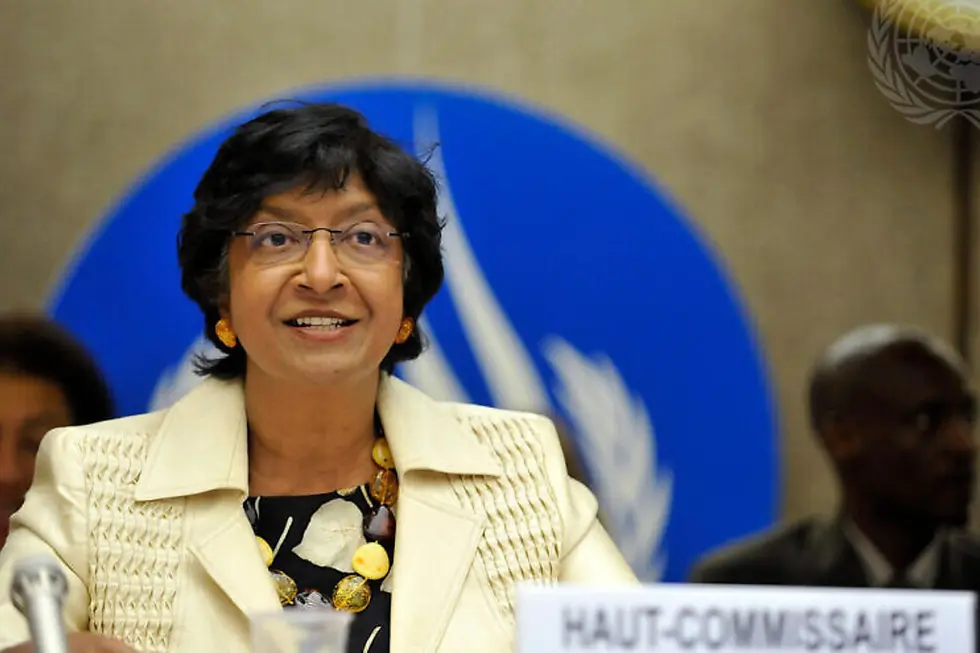
Navi Pillay has been awarded the 2026 Nobel Peace Prize for her efforts to promote peace and international law. The award recognises a career devoted to accountability for the gravest crimes human beings commit against other human beings. It acknowledges her commitment to universal legal principles—from her work as a judge at the International Criminal Tribunal for Rwanda and the International Criminal Court to her later service as UN High Commissioner for Human Rights. At a time when international law is under intense pressure, honouring Pillay affirms that peace depends not only on political negotiation, but also on justice, institutions, and the protection of human dignity. Much of the media and many non-governmental organisations have welcomed the Nobel Committee’s decision, although some voices have also criticised the choice.[1]
Symbolically, the prize offers hope to people living through serious conflicts and situations of injustice—from Palestine and Israel to Ukraine and Russia, and many other, forgotten places that rarely make the headlines. In a world that can seem increasingly lawless, it sends a powerful message: the struggle to protect human dignity is not over, and neither is the story of human rights. Justice may not be achieved within our lifetimes, but it remains worth pursuing. The suffering of people in one part of the world concerns us all, and societies cannot truly move forward when injustice is simply denied or forgotten. International organisations including the United Nations are surely far from perfect, but they provide frameworks through which accountability can at least be sought rather than completely abandoned.
This moment also brings José Saramago to mind, the first Portuguese writer to receive the Nobel Prize in Literature, in 1998, and an author who repeatedly brought questions of human rights to the fore. In his Nobel Banquet Speech, which took place exactly 50 years after the adoption of the Universal Declaration of Human Rights, Saramago warned that governments endorse human rights standards without doing enough to implement them, while powerful multinational corporations often act in complete disregard of them. Saramago’s criticism did not stop there, though, and he also addressed individuals, like you and me. He reminded us that human rights become real only when ordinary people accept responsibility for sustaining them in everyday life.
Saramago described the contradiction of a humanity capable of extraordinary technological progress yet unable to speak to the neighbour next door. That contradiction is still keenly felt today, and it feels especially urgent in the era of artificial intelligence in which we are currently living. AI can assist us, but it can neither replace our human experience nor assume our moral responsibility to resolve questions of justice on our behalf. Our capacity to experience emotions, including empathy, to make judgements and errors, and to learn through all of this is inseparable from what it means to be human—a messy, complex, fragile yet fantastic “invention”! Technology may support and even enhance our abilities, but it cannot replace or experience our “humanness”.
Recognising our shared humanity is important here, and it must therefore lead us to action. It is not enough to identify suffering; we must pursue fair and sustainable responses that allow people to live with dignity and enjoy a peaceful (co-)existence. We share this one planet, and our future depends on cooperation across borders as well as responsibility within them. Whether we like it or not, people are interconnected, and it is very important to address injustice in all parts of the world, as Martin Luther King famously expressed in the past—“Injustice anywhere is a threat to justice everywhere.”
Like Navi Pillay, I believe in the rule of law and in institutions, and have a leaning towards the international ‘sphere’.[2] In any case, both international and national institutions are interdependent: the former negotiate and articulate shared legal commitments and hold open a vision of where the world should be heading, while the latter seek to translate those commitments into practice for real people on the ground. Arguably, neither can fully deliver justice without the other. I identify with Pillay not only as someone who believes in peace and international law, but also as a woman with a foreign background/heritage who strives to make the world a little better—in her case, one international court case at a time; in my own, listening to and teaching one student cohort at a time... We can all contribute, through actions big and small, to making the world a little better every single day.
Pillay’s Nobel Peace Prize reminds us that injustice must not be forgotten, that the rule of law remains crucially important, and that the long pursuit of human rights and international justice is a project worth contributing to—at least to date, we haven’t yet come up with anything better than that!
[1] Supporting the decision are, for example, Reuters, The Guardian, Amnesty International. Criticism has been expressed, for example, by UN Watch.
[2] For reflections about the rule of law, by one of the greatest UK judges of our times, read Bingham, T. (2010), The rule of law, Allen Lane.
Karen da Costa PhD, is Senior Lecturer in Human Rights at the School of Global Studies, University of Gothenburg. Her research and teaching focus on international human rights law, disaster law and risk reduction, and the protection of rights during pandemics and other emergencies. She has held academic appointments in Sweden, the United Kingdom, and Ireland, and has worked as a legal consultant for the International Federation of Red Cross and Red Crescent Societies. Her publications and international projects examine how law, governance, and human rights can strengthen resilience and accountability in times of crisis.


